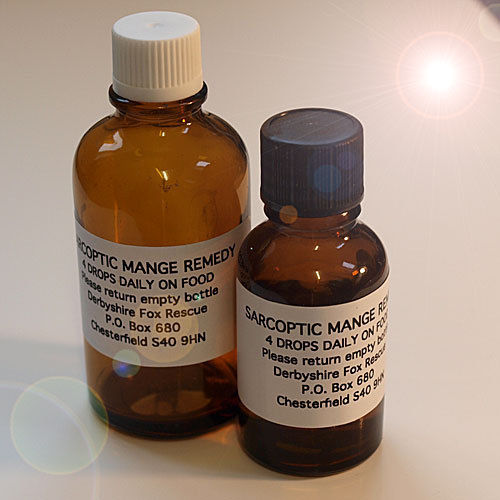
Homoeopathic Sarcoptic Mange treatment – Arsenicum Alb & Sulphur 30c Purchase securely from visit our secure e-shop
Sarcoptic Mange in Foxes: Symptoms, Treatment & Advice
30 Years of Fox Rescue Experience
For more than 30 years, we rescued and cared for foxes affected by injury and illness, including sarcoptic mange.
During those years, we treated many foxes suffering from mange and developed extensive practical experience in caring for affected animals. We also supplied our mange remedy to fox carers and members of the public in many countries.
We have now retired from active fox rescue and are no longer able to undertake rescues or provide a rescue service. We are keeping this website available as an information resource about foxes, their behaviour and welfare, based on our many years of experience.
Our former telephone number was 01246 850850. Please note that we are retired and no longer provide a rescue service.
What Is Sarcoptic Mange?
Sarcoptic mange is caused by microscopic mites that burrow into the skin. Affected foxes can develop intense itching, hair loss, sore or thickened skin and other signs of irritation.
During our years of fox rescue, sarcoptic mange was one of the conditions we regularly encountered.
Our Experience Treating Foxes With Mange
The information below describes the treatment approach we used during our years of caring for foxes.
We used a homoeopathic preparation containing Arsenicum Alb and Sulphur 30c. In our experience, the treatment was useful in cases of sarcoptic mange in foxes.
We supplied the remedy to fox carers and members of the public in many countries and received reports from people treating affected animals.
The following information records how we used the treatment during our rescue work.
How Did We Use This Treatment?
We administered four drops of the treatment to each fox daily, placing it on food and in drinking water.
When several foxes were visiting an area, we cut sandwiches into approximately six to nine pieces and put two drops on each piece. We then scattered the pieces around the area where the foxes were seen.
In our experience, it could take several weeks before a noticeable improvement occurred. We looked for signs such as reduced scratching and biting, followed by the gradual return of the fox’s hair.
Once the hair had started to grow back and the fox appeared to have recovered, we stopped the treatment.
How Long Did We Use the Treatment?
The treatment did not kill the mange mite directly. Our understanding from our experience was that the treatment worked over a period of time, so improvement was not usually immediate.
We generally allowed several weeks for the fox to show signs of improvement.
Where further treatment appeared necessary, our historical approach was to use a maximum period of approximately four to six weeks, followed by several weeks without treatment.
Can Mange Return?
Yes. A fox that has recovered from mange can potentially become affected again.
The mites can survive in the environment, so a fox may encounter them again as it moves through areas where affected animals have been.
For that reason, we found it important to monitor foxes after treatment and watch for renewed scratching, hair loss or other signs of mange.
Is the Treatment Safe for Other Animals?
During our years of supplying the remedy, we also supplied it to pet owners for use with dogs and other animals.
However, animals can react differently to treatments and products. Anyone considering treatment for a domestic pet should seek appropriate advice from a veterinary professional.
An Important Note About This Information
This page records our own experience of treating foxes during more than 30 years of fox rescue.
It is not a current rescue service, and we cannot assess individual foxes or provide an active rescue service.
Because we have now retired, readers should consider current professional wildlife or veterinary advice when deciding how to help an individual sick or injured fox.
Our intention in keeping this information online is to preserve the practical knowledge we gained from many years of working directly with foxes and to make that information available to people who may find it useful.
Sales site: For products and further information, visit Mange.org.uk.
Sales site: For products and further information, visit Mange.org.uk.
Derbyshire Fox Rescue | Chesterfield UK | mange.org.uk | info@derbyfoxes.org.uk | +44 01246 850850
Our SHOP www.mange.org.uk
Is it possible to give worming treatment to foxes. I found one of the 4 month old cubs dead yesterday and someone suggested we should and worming treatment. We have already treated them for mange
Hi, yes we have a wormer available on our site that can be used safely on most animals, it’s called Four Seasons Wormer
Hi, I saw a fox that shows signs that it could have mange , I think that looks like the first stage, the tail lost some of its fur and she kept scratching herself. I bought the mange drops treatment on your website today and says 4 drops daily, but the problem is that the fox doesn’t stay in my backyard but it is where I work and I am only there twice a week. Will the medicine still work if it is only given twice a week? Any tips to help me ? I would love to be able to help the fox, it is a cub from this summer , its mother had two other cubs as well. Also the other foxes from the same family will be eating the food as well, is this safe for them? I also leave them some water in a clean plant pot dish. Should I put the medicine in the water and in the food as well? Thanks
Hi, I bought your sarcoptic mange remedy for foxes in my area who have mange.
My problem is that I thought the bottle would have an eye dropper kind of thing, as it is, with the plaster stopper with a hole in it I have no idea how much remedy I put on the food. I know they can’t overdose but I couldn’t tell if I put enough either. An eye dropper would be very useful on these bottles. Julie
Hi Julie, as stated on the label its 4 drops daily per animal on food – the dropper is built in to the bottle now
Can giving a fox wormers for dogs hurts it?
Four Seasons wormer is available on our site http://www.mange.org.uk
4 drops per animal on food daily, info is on the bottle and on our pages
I have two visiting foxes suffering from mange, one with considerable fur loss. I have been treating with homeopathic medication with limited success although it has previously worked well with other foxes. Is there stronger medication I can obtain e.g. Bravecto? I have contacted my vet but they will not prescribe for wildlife. I am able to target feed the foxes in question. I can provide photos if required.
Hi, vets will not treat animals in the wild, our remedy should work in about a month – missing hair should start to regrow
Hi, what is the remedy you suggested, please. I have 2 sibling cubs with severe mange, have treated them with arsenicum and sulphur 30c for 3 weeks and their condition appears to be even worse.
3 weeks isn’t long enough, its not unusual to treat for up to 6 weeks dependent on severity – please contact us directly by email or call, cheers
the remedy is on our website mange.org.uk
Its easier to treat all the foxes, 4 drops per fox daily for approx 4 weeks
Hello. I am wondering if the sarcoptic mange has a use by date. I bought a bottle a couple of years ago. I know have another fox with mange visiting my garden and wonder is my bottle still effective or do I need to purchase another?
Hi Jessica, if kept in a cool dark place it should last for years, use what you have and then contact us when you need another bottle, cheers
How can a homeopathic remedy make a foxes skin slightly toxic?
This is how the remedy works, 3-4 weeks use normally
Do you sell this for people in the US? I live in the mountains in Colorado and have a wild fox with mange on it’s face and around it’s eyes.
Hi, yes we ship to the USA, please visit our shop http://www.mange.org.uk