Sales site: For products and further information, visit Mange.org.uk.
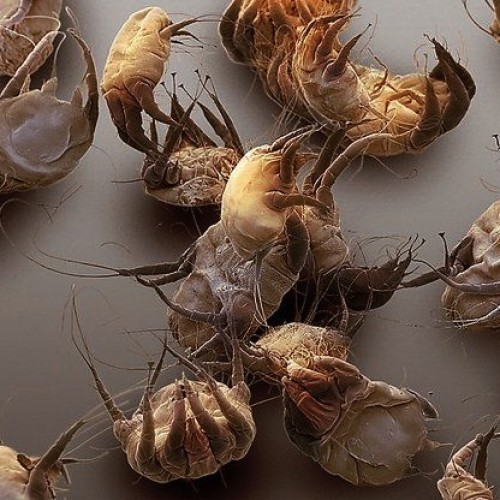
Sarcoptic mange is a highly contagious skin disease found in animals, caused by the Sarcoptes scabiei mite. These mites will burrow through the skin causing intense itching and irritation. The scratching that results from mange is what causes the majority of the animal’s hair to fall out. This is a treatable medical condition, but is highly contagious for other animals. Pet owners are advised to keep the animal quarantined while it is being treated for mange.
The life cycle (17–21 days) is spent on the host animal. Female mites burrow into the stratum corneum to lay their eggs. Sarcoptic mange is readily transmissible between animals by means of direct contact; transmission via indirect contact may also occur by combs, brushes, towels, and blankets.
Sarcoptic mange mites are extremely small generally not visible to the naked eye, several thousand of which can burrow into a single square-centimetre of skin. Mites burrow into the skin where they may live for up to a month. As the mite burrows, tissue fluids and debris are deposited on the surface of the animal’s skin forming an intensely itchy crust that causes the fox to scratch frequently.
Understanding the life cycle of the Sarcoptes scabiei mite helps explain how sarcoptic mange develops in foxes, how it spreads, and why affected animals may require treatment. Early recognition of the signs of mange can help wildlife rescuers and members of the public seek appropriate veterinary or wildlife advice.
Sales site: For products and further information, visit Mange.org.uk.
Derbyshire Fox Rescue | Chesterfield UK | mange.org.uk | info@derbyfoxes.org.uk | +44 01246 850850
Our SHOP www.mange.org.uk